people die each year in road traffic crashes worldwide
IMPACT
The road’s impact
is always human.
Understanding road safety means looking clearly at the evidence—and remembering the lives behind it.
ROAD SAFETY CONTEXT
Evidence helps us see
the scale. People tell us why it matters.
Road safety is a global public-health concern. Reported and modelled estimates can differ because they draw on different methods, reporting systems and timeframes. Each should be read in its proper context.
ROFIK treats evidence as a starting point for understanding—not a substitute for the human stories behind it.
GLOBAL ROAD SAFETY CONTEXT
WHO FACT SHEET · 20 JULY 2026The scale is global.
The burden is deeply unequal.
Behind every figure is a journey that ended differently than someone expected.
World Health Organization, Road traffic injuries fact sheet, published 20 July 2026. Global estimates are not the same as reported national counts; see the source for methodology and year context.
people suffer non-fatal road traffic injuries each year
road traffic injuries are the leading cause of death for children and young adults in this age group
of global road deaths occur in low- and middle-income countries, which have around 60% of the world’s vehicles
of road deaths are among vulnerable road users, including pedestrians, cyclists and motorcyclists
ECONOMIC COSTS
Road crashes carry an economic cost too.
These estimates come from different sources and have different scope. Read each within its own methodology; they are not combined.
Road traffic crashes cost most countries around 3% of their gross domestic product (GDP).
Fact sheet · 20 July 2026
According to GRSF estimates cited by the World Bank, the total economic cost of road-traffic fatalities and injuries in low- and middle-income countries ranges from 2–6% of GDP.
Results brief · 25 March 2024
WHO AFRICAN REGION
Road safety in the WHO African Region.
The regional report presents the estimated toll and its context. The mortality figures below refer to 2021.
estimated road deaths in 2021
deaths per 100,000 people in 2021
of global road deaths
of the world’s motorised vehicle fleet
increase in fatalities from 2010 to 2021
Source: WHO, Road safety in the WHO African Region 2023 · published 16 July 2024 · data: 2021 (increase: 2010–2021)
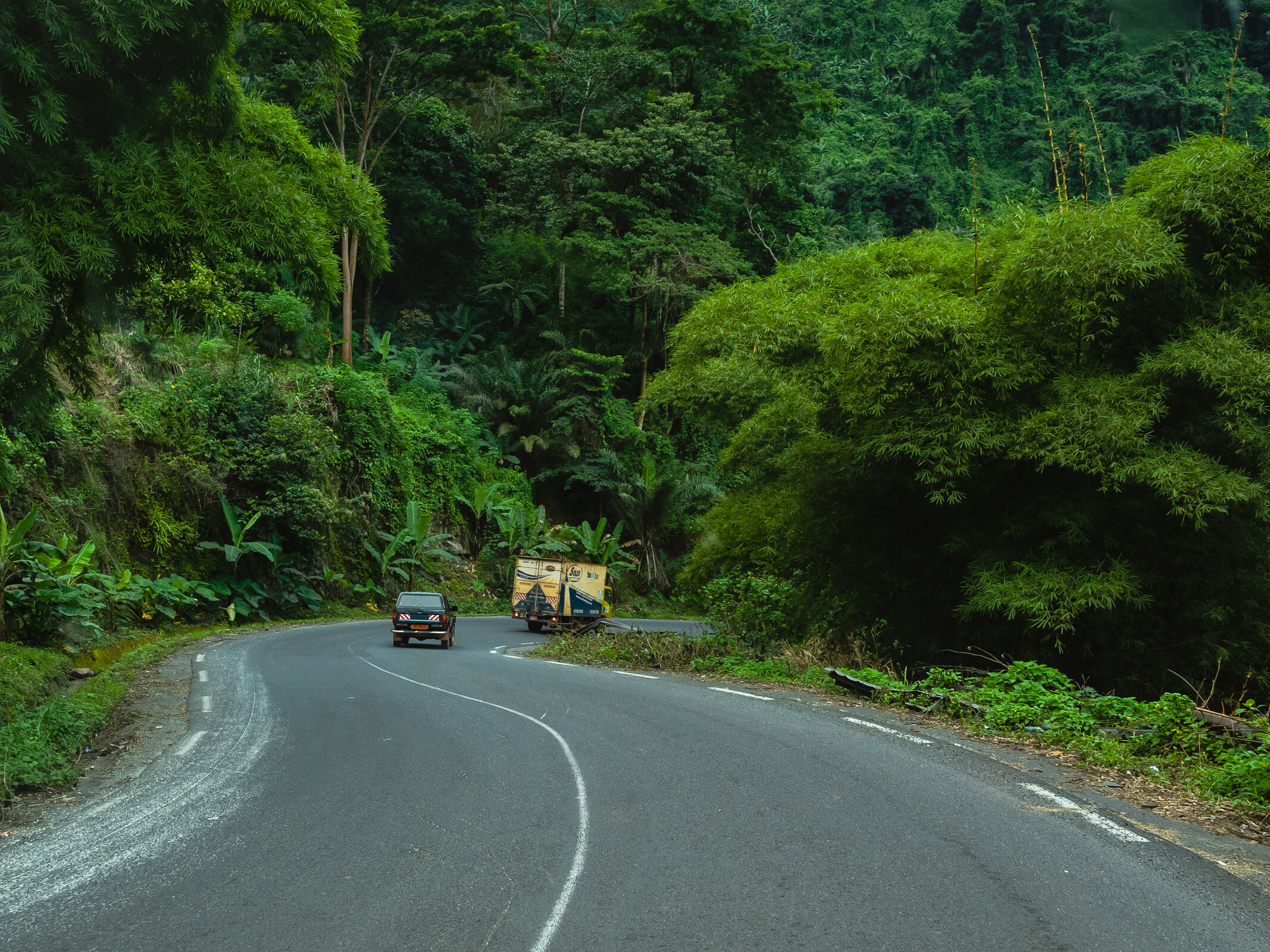
CAMEROON · WHERE WE BEGIN
For ROFIK, this isn’t a distant problem.
Cameroon is where our work begins: with the journeys people make, the information available to them, and the opportunity to connect perspectives around safer mobility.
We do not claim impact before the work is done. We are building toward a road ecosystem where better information can support better-informed decisions.
CAMEROON · 2021 DATA · WHO GLOBAL STATUS REPORT ON ROAD SAFETY 2023 · Cameroon country profile
The officially reported count and WHO-modelled estimate are different measures. Their difference should not be interpreted as a direct measure of underreporting without further analysis.
HUMAN CONSEQUENCE
No family experiences
a statistic. They experience a loss.
Every road-safety effort begins with a simple truth: every person’s journey matters to someone.
We believe more journeys should end at home.ECONOMIC BURDEN · CAMEROON
Unsafe roads carry a substantial economic burden.
Beyond the human cost, unsafe roads impose a substantial economic burden on households, businesses, public services and the wider economy.
estimated annual cost of fatal and serious road crashes in Cameroon
≈ 9.8% of GDP · 2016 estimate
World Bank / GRSF sourceestimated annual economic impact associated with road-safety challenges in Cameroon
Ministry of Transport publicationThese estimates use different reference periods and methodologies; they are not equivalent calculations.
SHARED RESPONSIBILITY
Progress asks us
to work together.
Communities, people on the road, transport operators, researchers and institutions each see a part of mobility. Trustworthy collaboration can bring those perspectives closer.
ROFIK is building toward that shared understanding—starting in Cameroon.